

Lina’s Diary

Photography &Words: Lina Stefanou
Poets and craftsman
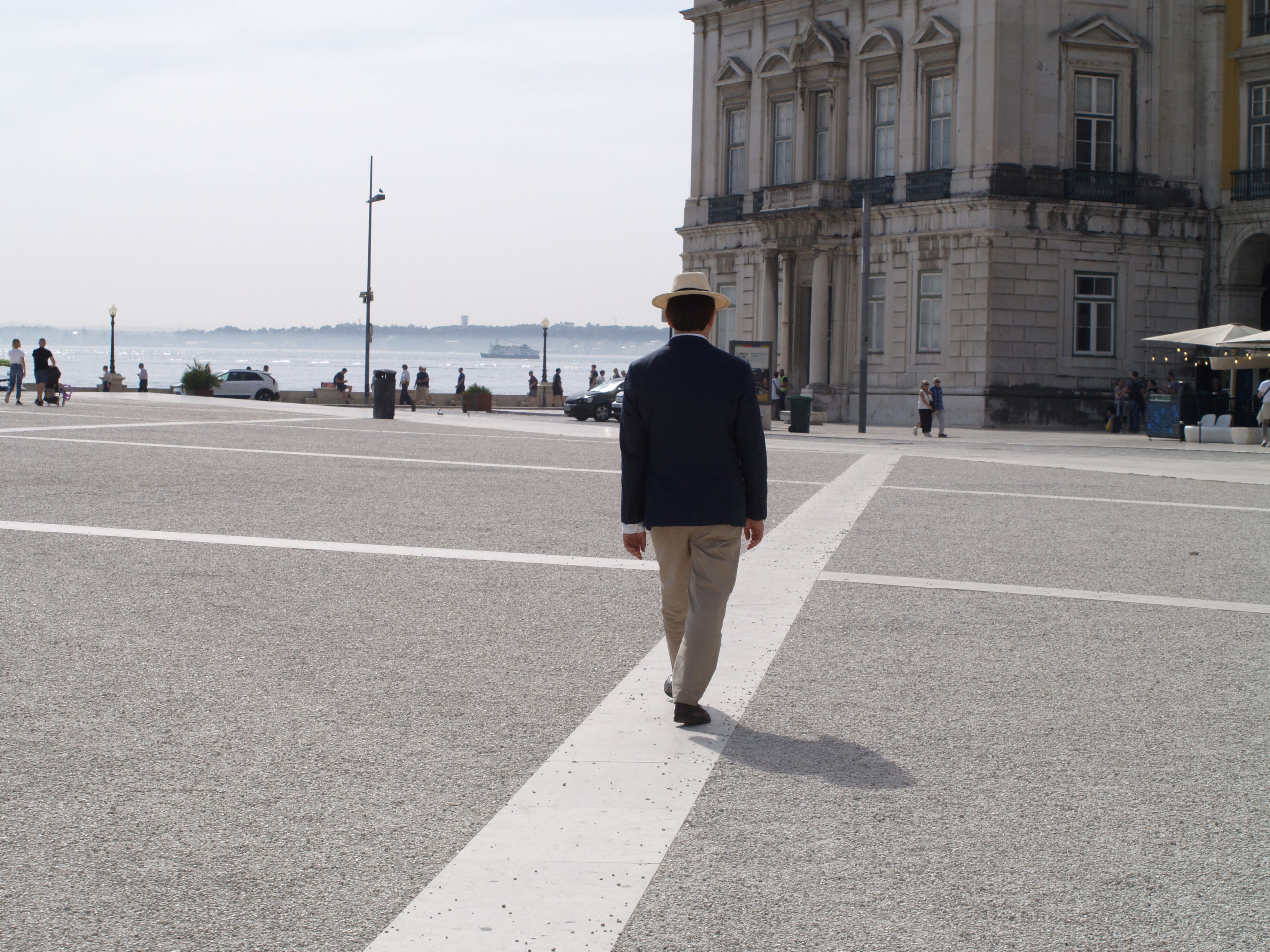
I land in a sun-drenched Lisbon. The hotel is far from the city centre, far from the metro network, and there is no bus service. Or maybe there is, but after a 3½-hour flight I am too tired to look for it. I take a taxi, and after a 35-minute, nine-euro ride I find myself in Praça do Comércio, the 30,660 sq. m.(!) square-symbol of Lisbon whose south side mirrors itself in the river Tagus. Its centre is dominated by the statue of King José I, who experienced the devastating earthquake of 1755, saw his palace razed to the ground and is said to have developed claustrophobia as a result. Yet the statue, designed as instructed by the cunning prime minister Marquis de Pombal, shows the horse-mounted king crushing snakes in a display of power and boldness; for fear may be only human, but when you are a king you had better keep it to yourself.
I walk under the grandiose arch of Rua Augusta and climb towards Chiado in search of the famous Cafe A Brasileira of Rua Garrett, a haunt of the great poet Fernando Pessoa. Out of breath, I sit down and order a huge and tasty toasted sandwich and an orangeade. Seen from the side, Pessoa’s sculpture outside the café, erected in the distant 1988—which feels like yesterday—looks even more solemn and sad than usual. It may be because of the tourists who take smiling photos next to it, oblivious of the contrast. The statue’s pensive gaze seems like an eternal pondering on the nature of human nature. Of the dozens of tourists who stop to touch the work of sculptor António Augusto Lagoa Henriques, only two young Japanese ladies in paper-thin blouses, white and floral, respectively, are possibly unaware of who Pessoa was and opt to have their selfies taken before the art-nouveau entrance of the café, blocking the path of the busy waiters. I look at them and go into my own melancholic musing on the nature of human nature.
I leave the café and walk up and down two of the seven hills on which Lisbon is built. At no. 72 rua Rua Nova do Almada I discover A Vida Portuguesa, the store opened in 2007 by the enterprising journalist Catarina Portas to promote the brands that survived the passage of time and highlight the quality of Portuguese manufacture. Products with original, old and beautiful packaging, created and fabricated in Portugal. A visit to A Vida Portuguesa is like a visit to the past, when life proceeded at a more sedate pace; it is only when you notice the price tags that you are brought sharply back to the present.
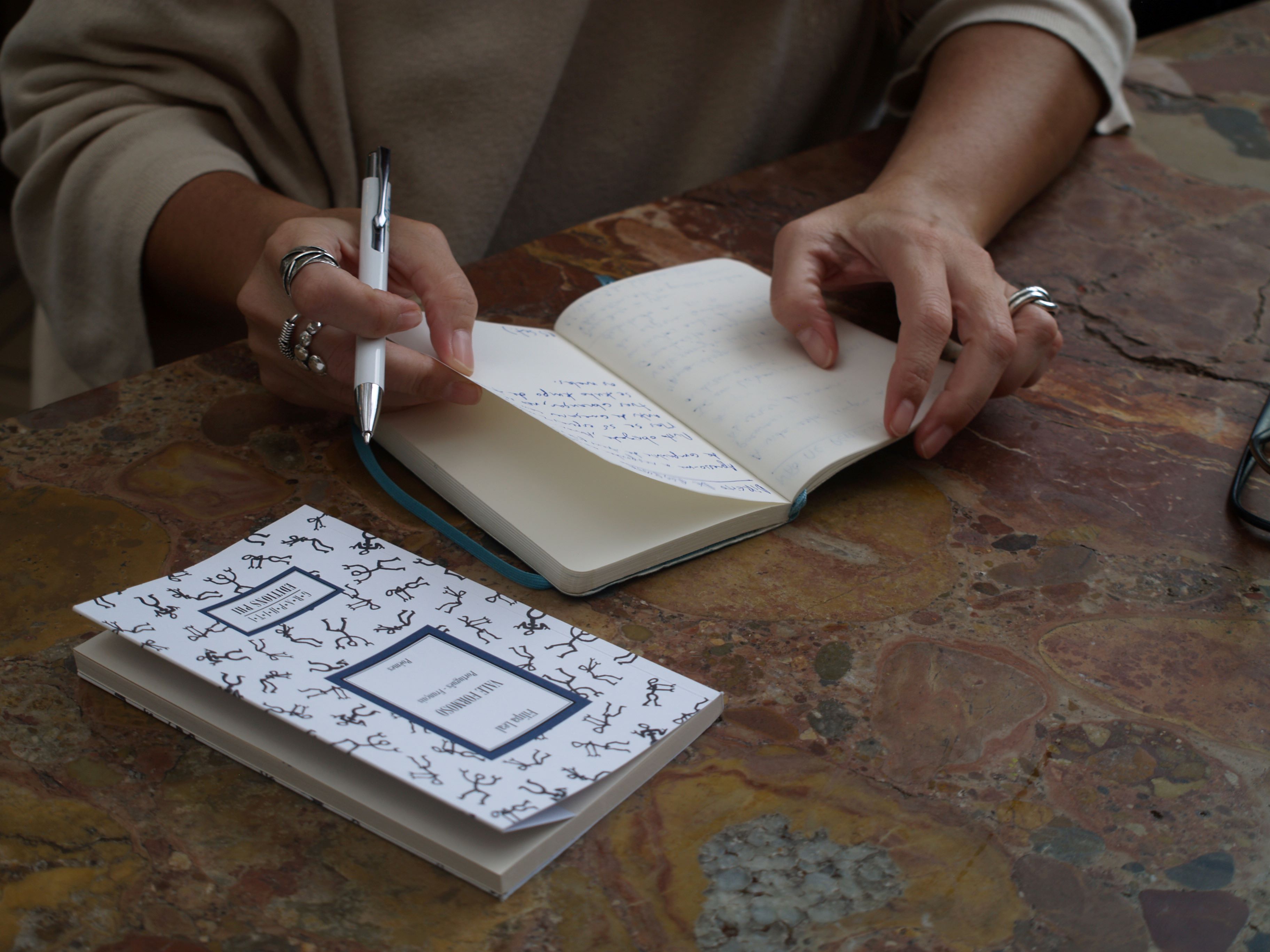
In the evening I meet my Portuguese friends, the poet Filipa Leal and singer and composer Mafalda Veiga whom I first met in 2022 at LEA, the Ibero-American Literature Festival of Athens. They take me to TIME OUT, the city’s latest hot spot in the old meat and vegetable market where dozens of restaurants provide haute cuisine at low prices. Although I like the concept, the sight of the roofed market with its hundreds of tables and hordes of people makes me claustrophobic, as if in sympathy with King José I, and I start looking for escape routes. Luckily, just in time the girls make a turn and lead me to the upper floor, a quiet place above the market and the city, and into one of the most classic restaurants, Pap’Açorda, with authentic Portuguese flavours—which means cod to the power of n and cooked in a thousand ways.
We are joined by their friend Helena Torres, we order a bottle of nice red wine from Douro and the night flows pleasantly.
Modern art and the invisible chairs
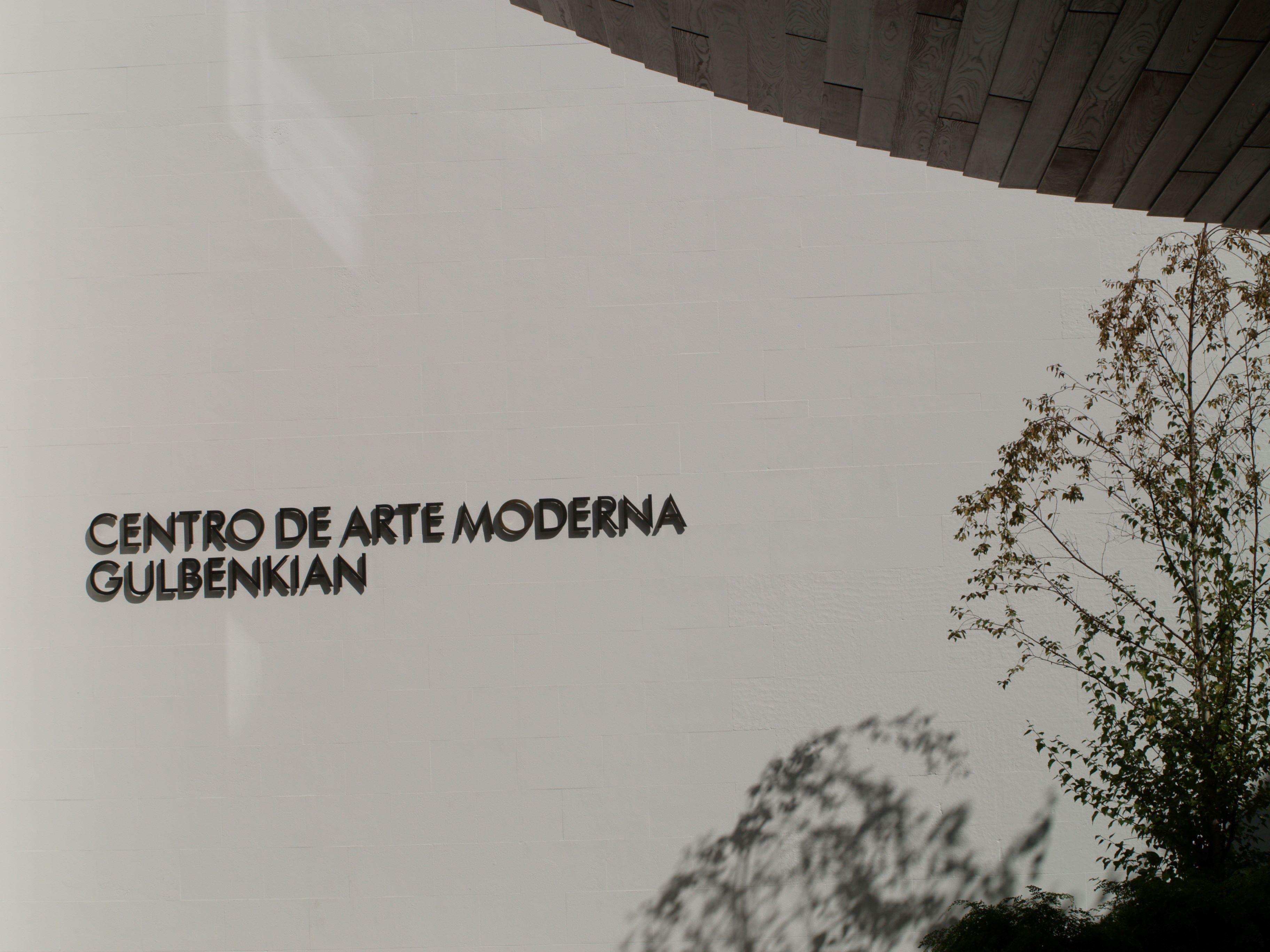
The hotel is twenty minutes away from CAM (Centro De Arte Moderna). I walk along large motorways flanked by multi-story apartment blocks, cross a bridge, stare at a passing train. I am in the ugly part of town—the part where architecture has succumbed to the need for more money. The gardens of the Calouste Gulbenkian Foundation, where CAM is housed, are balm for the eyes. A green jungle with shaded lanes and wild geese cooling off in small lakes carefully designed to look natural. It is through this forest that CAM suddenly emerges, this exquisite creation by Japanese architect Kengo Kuma. On his impressive lines the gaze finally gets a rest.
The exhibition in the museum is called Scheherazade and is one more way for some of the works in this huge collection of about 12,000 pieces to be put together and tell a story. “From the speech bubbles of Antonio Areal’s The Dramatic History of an Egg to the letters drawn by Sonia Delaunay, the reference to verbal expression is a space that opens up to endless possibilities and combinations”, I read in the two curators’ note. The subheading ‘An Open Book’ brings together works by Eduardo Nery, Maria Helena Vieira da Silva, Fernanda Fragateiro and Pessoa’s second portrait by his friend Almada Negreiros, but what attracts me is an untitled work by Jorge Pinheiro. Rows of red dots in a black backdrop like an incomprehensible script, like a code or like Morse signals. And what if we could speak in something other than words? I am drawn to this work because Pinheiro here manages to visualise silence.
I suddenly notice that all guards are standing. In every room, young people, mostly students, stand on their feet—for four hours, as I am told—to make some pocket money. “There used to be chairs”, a sweet girl tells me with a smile, “but they were removed. I don’t know why. We can take it, but the full-time guards here have to stand for 8 to 10 hours every day!”.
So much beauty on the one hand and such insensitivity on the other makes for a bad combination. I walk out for a breath of air into the wonderful gardens with the aromatic plants and the lush vegetation. I see people everywhere sitting to read or enjoy the sun, I also see many empty chairs waiting for the next visitors. It is as if some thoughtless host took all the chairs outside the Museum and then forgot to bring them back in after the party.
When Pessoa leads you to an American billiards place
I move to a wonderful Airbnb flat that makes you dream you are in love, you live permanently in Lisbon and life is beautiful. The windows overlook the river Tagus, whose waters join together the city’s historical eras and have been resolutely setting Lisbon’s rhythm for centuries. A 12-deck cruise ship towers above the sloped red-tile roofs. Over the next days I develop the habit of taking photos of the river at different times, with different lighting. I soon realise that cruise ships arrive at daybreak and sail off at dusk. I take pictures of Tagus with and without them. And I increasingly question the idea of paying good money to be shut in a floating high-rise building without vital space and with a privacy that stops at the confines of a cabin.
I look at them from the flat with two large bedrooms, a kitchen, a sitting room and a small balcony, and feel like a queen.
The Museo do Fado is nearby, almost across the street, and I put it on my list of things to do. For now, though, it is time for a first visit to Casa Fernando Pessoa, which hosts Poetry Days 2025: a small festival with poets from Portugal, Palestine, Montenegro, Greece and Uganda. I attend the lecture of my friend Filipa, get to meet Katerina Iliopoulou, the poet who ably represents Greece, and have a chat with director Clara Riso, who explains to me the changes they have made to make the famous poet’s house more attractive to visitors. I ask her about the kind of person Pessoa was. “He was a man who had this group of friends, who was tender to his family and the children of his family. Who was working as a freelance to pay his bills. I have a great admiration for him. The more I know about him the more I admire him. He left only one book published during his life, one book with Portuguese poems and four small leaflets with poems in English. But when he died, hundreds of manuscripts were found inside a wooden trunk, and they have yet to be fully archived. The more we know, and the more I study and get to know about him, the more amazed I am. His was, in fact, a genius mind”.
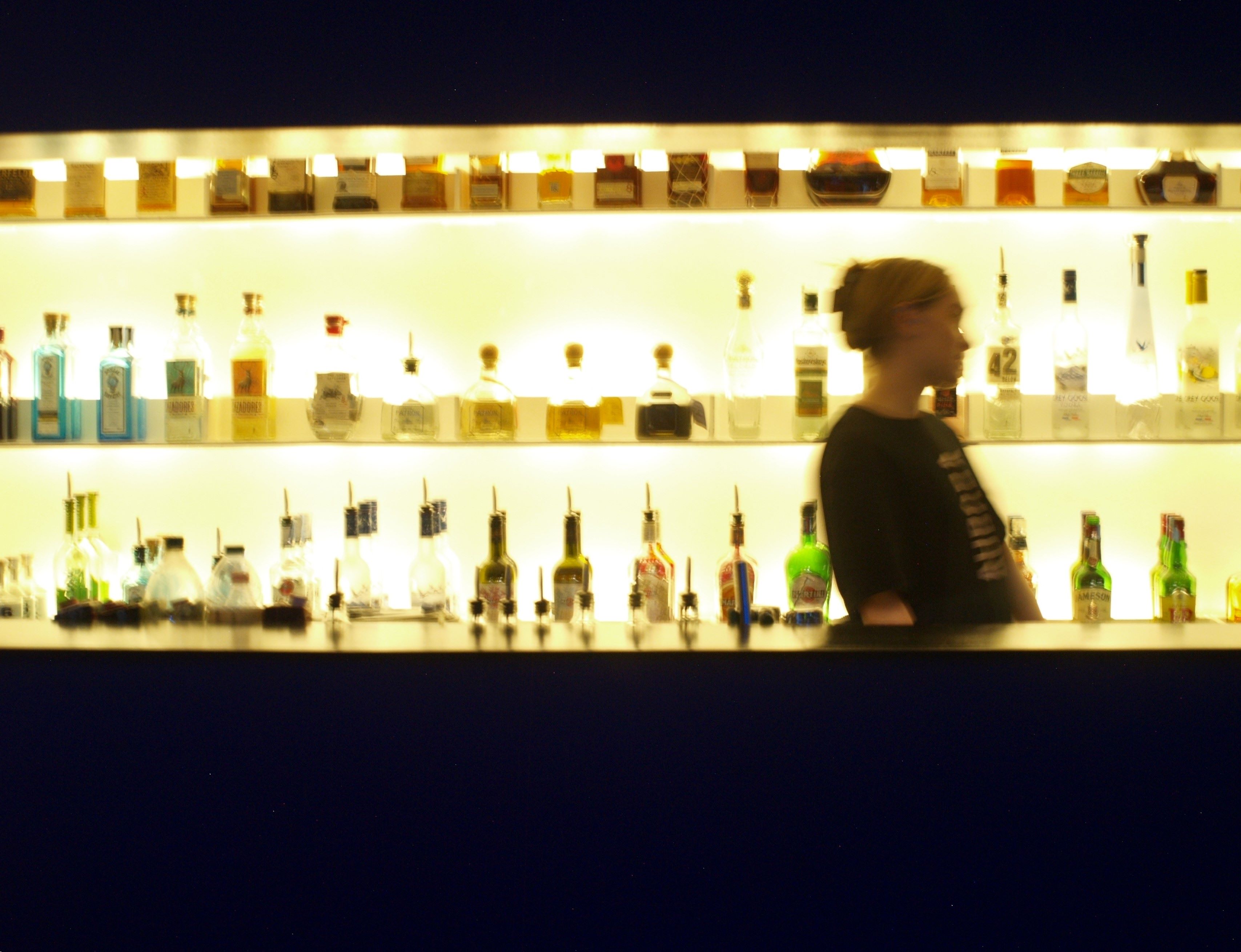
Afterwards, the girls have arranged for us to go to a vintage bar that has successfully stood the test of time since the ’70s. FoxTrot is famous for its cocktails, its authentic atmosphere and its wonderful American pool table. We accompany our drinks with a tasty prego (a sandwich made with a thin, tender slice of beef seasoned with garlic, salt, and pepper and then cooked) as we delve into the poetry of the word ‘play’.
The story of Helena
One end of the wondrous botanic gardens hosts the National Museum of Natural History and Science and its school. There is an exhibition by the students of drawing today; among them, our friend Helena, who decided that learning how to draw animals and plants in every detail is a good way to spend your time when you are retired. We walk down the long, bare corridor with the azulejo tiles and enter a huge room with its walls covered by the students’ striking works. We admire the details on the drawings, and Helena tells us that doclisboa 25, the International Film Festival, starts the next day in one of the city’s historic cinemas and wants us to go. “There is this documentary I want to see, because it was filmed in Baia dos Tigres”, she says with her eyes shining. When I ask her what it is, she tells me her incredible story.
Baía dos Tigres (Tiger Bay) is an area in Angola, a former Portuguese colony, which is now known mostly as a ghost island. It is situated in the Namibe Province and it once had been a small peninsula known as Península dos Tigres. In 1950, Baía dos Tigres had already a prosperous community of families descending from the Algarvian fishermen who settled in the area in 1860. It was an important fishing centre with several units for fish- and fish-oil processing, developing industries and prospering.
“I spent a year and a half there as a child”, says Helena. “In 1957, the construction of an important railway in Southwest Angola was the purpose for deploying the “Brigada de estudos do Caminho de Ferro da Baía dos Tigres”, the group my father was part of. The mission was to design, develop and oversee the construction of 135 km of railway north of Baía dos Tigres. The government built several state buildings: telecommunications/post office, a hospital, port authority, police authority, a school and a church which never operated because there was no priest. I was little, but I remember everything; for in a place where nothing ever happens, every day is etched in your memory with precision. We had no roads. There was only an airstrip for the aircraft that brought our supplies. We had no electricity, no water supply. And the sand came in from all sides, hence the buildings were perched on stilts to keep them above ground; still, unless we swept every day we’d be covered in sand. We would get fish from the fishermen, and that’s what we ate: the tastiest fish I’ve ever had in my life. Baía dos Tigres in the fifties wasn’t a gloomy place. I had a happy childhood time while living there, playing and learning in school”.
In 1962, when Helena and her parents had already left, the ocean broke through the isthmus of the peninsula. Tigres became an island overnight. It was gradually abandoned, and is now a ghost town reclaimed by the desert.
Next day we all walk along the wonderful Avenida da Liberdade on our way to the historic São Jorge cinema to see this film of Carlos Conceição. It is a fiction movie shot on the island where Helena spent a happy year and a half of her childhood. The lights go out and as the ghost buildings and the desert fill the screen, I am watching a moved Helena excitedly pointing out to Mafalda the area behind the post office, where her house once stood but is now engulfed by the sand.
We end up for a meal at Ribadouro, a classic seafood place with live lobsters in the front window! The aged waiter brings a lobster and shows me its belly: it is a mother full of eggs. My appetite vanishes, he takes the lobster away with a scornful expression and decides to have no more to do with us. We order some delicious fish from another waiter. On the way out I stop at the water tank with the lobsters on death row. Two of them are making love. Life remains stronger than death. Possibly…
Tiago Salazar and Fernando the tuk tuk
What kind of people are the Portuguese? I put this question to everyone I meet, and I get a different answer from each.
– “They are reserved at first, but if they like you they’ll take you in and treat you like one of their own. Quite unlike the Spaniards, who will never invite you to their home no matter how long they’ve known you”.
– “They are passive. They won’t react, no matter what you do to them”.
– “They are warm-hearted. If something happens, they will look after you”.
– “Soledad is the word for a Portuguese. Soledad. Because we are leaving, always leaving and returning and leaving. So this kind of feeling of loneliness is our typical trait. And we have a word for this feeling—we call it soledad. This kind of melancholy, because we have this history of leaving and leaving and leaving…”
-”Generous and giving”.
– “They have a kind of tolerance to difference”
– “Catholics”(!)
-“Things in the interior of the country are not so easy. And we are almost all obliged to emigrate, either to a big city or to another country. Most of my friends don’t live in my small village which is up north, near Algarve. They have emigrated to France to work in service or whatever. So it’s not easy when you go there, because it’s a place where old people live”, says a woman I meet briefly one night.
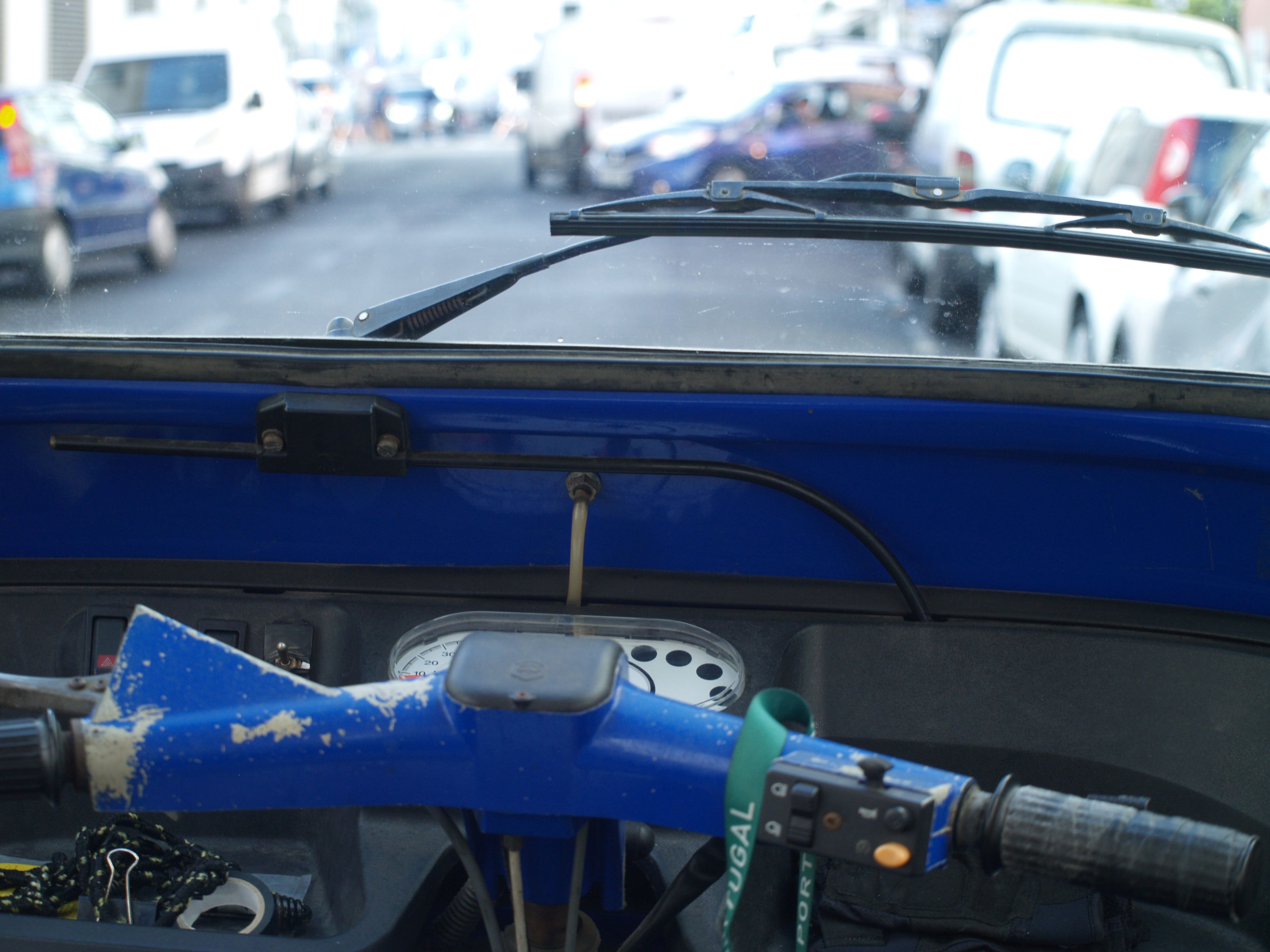
To Tiago Salazar, again, the Portuguese are inventive. As explorers, they had to invent ways to survive under the most adverse conditions. Tiago is a writer of historical fiction. He comes to find me at the entrance to my building and introduces me to… Fernando, his blue tuk tuk. The little three-wheeler roars up the narrow uphill lanes of the city with a lion’s disposition and stamina. As he drives towards the castle of St George, Tiago tells me his own story.
“I worked as a journalist since I was 19, I never stopped, and I still do it. Ten – fifteen years ago I was living in Amsterdam. I came here for a vacation and saw a friend, a photographer, doing this. It was thrilling. He drove a nice car, a fancy Italian design, he did storytelling, and he was having fun. I imagined myself in this, talking about Lisbon, telling stories, and I liked the idea. So I proposed to do that with him with his tuk tuk for one summer, and write short stories every day for a magazine. That’s how it started. I drove every day. Three months in a row. I did 90 Chronicles. Every day I wrote a story about the people who joined me on a tour. You cannot imagine how people get emotional. Empathy comes quite fast”.
At the end of that summer those chronicles became a successful book called The Accidental Driver. And then Tiago bought Fernando.
His deft driving successfully avoids buses, cars, trams and the tourists who walk oblivious in the middle of the street, and I am thinking that you must be mad to drive in Lisbon. But Tiago remains cool as he tells me the history of the city. He tells me about the legend of its founder being Ulysses, hence it was called Ulyssippo in Latin and was later referred to as “Olisippo”; about the Romans who first decided to build a city where Alfama and the castle stands. He says that Lisbon means ‘good water’, which is why the Romans chose this area; they called it Lixbona and Luzbona, which means ‘good light’. “So you have both good water and light”.
He also tells me how he goes fishing in the river with his friends. “Everybody talks about sardines, but we have a lot of fish coming from the river. Even with those crazy cruise ships there. They are awful and they pollute a lot. But we can go further up and fish. I do that very often. We go by boat and spend the whole day, and we fish all kinds of fish, different varieties”.
With all this, we arrive at the Castelo de São Jorge before I know it. From here you can see the whole city. The 360-degree view is enchanting, but the number of tourists is dishearteningly large. I say goodbye to Tiago and go to join the girls at zero zero, a beautiful pizzeria whose yard borders the botanical gardens. We eat our delicious wood-fired pizzas and look at the green parrots who fly around some tall Sequoia sempervirens trees. Our friend Sonia has just come from a visit to the house of Amalia Rodrigues; she reports that the house remains exactly as it was, and that Amalia’s parrot is still alive! Old Chico is now thirty years old, his green colour is now almost grey but he continues to live in the garden and call out the names of Amalia, her employee Eugenia, and the dog Caruso. For some reason, Chico suddenly reminds me of those buildings half-buried in the desert of Baía dos Tigres.
The collector -who wasn’t- Reading Slowly at LX Factory
Waking in Lisbon calls for flat shoes—especially in a drizzle, when the narrow lanes become too slippery. A stroll in Belem. I walk past Jerónimos Monastery, the resting place of Portuguese royalty as well as poets and great explorers (Vasco Da Gama, Luís de Camões, Fernando Pessoa, and others). I end up at MACAM (Museum of Contemporary Art Armando Martins), which hosts the private collection of Armando Martins. The museum is housed in an impressive 18th-century palace that has been restored and extended to include a five-star hotel. The collection comprises works of Portuguese modern art and national and international contemporary art, and is on permanent display in both the museum space and the hotel’s rooms and communal areas. Of all the exhibits I remember most the 1974 video Sweet dreams are made of this by Carlos Aires. The video shows two policemen in anti-riot uniforms dancing a tango version of the famous ’80s song written and performed by Eurhythmics. As I read later, the video was recorded in the ballroom and celebration space of the Museo Cerralbo in Madrid. Of the two rooms I prefer the section of national and international contemporary art, from which this phrase by Carlos Noronha Feio has remained with me:
(a
drop
in
the
universe
has
universes
of
its
own!)
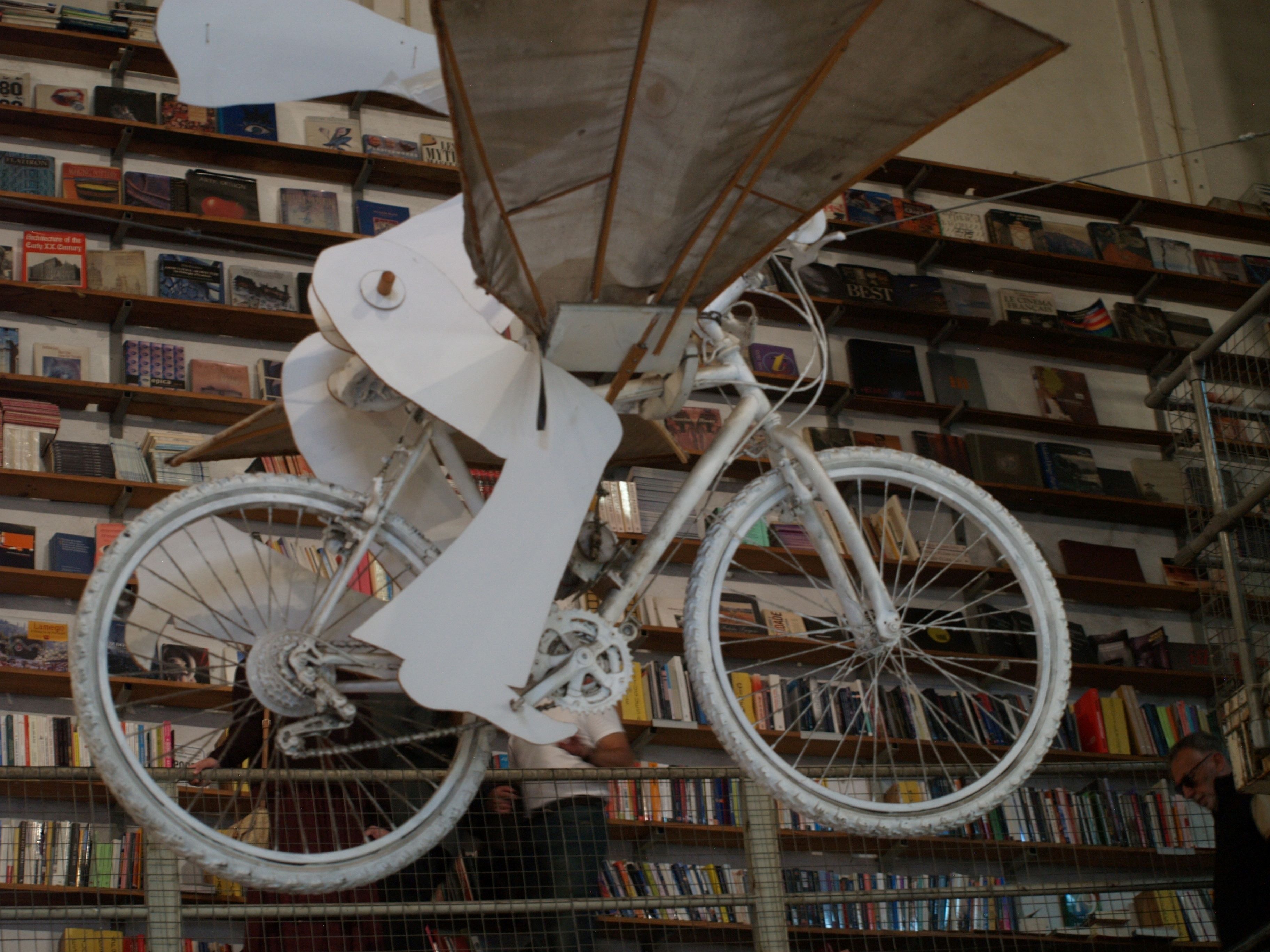
After the Museum, a stroll around LX Factory, an industrial area with 19th-century buildings which has come back to life as a hub of creativity and imagination. Restaurants, bars, small shops, artists’ studios and the town’s most impressive bookstore, housed in an old printer’s shop. At LER DEVAGAR (Reading Slowly), apart from thousands of books and vinyl records you can see the Flying Cyclist by artist Pietro Proserpio, the books hanging from the ceiling or the old printing press whose imposing mass dominates the upper floor, and walk along the iron passageways and the corridors of the old printing facility. I am thinking that if there were more imaginative bookstores like this, people might read more.
Café São Bento and the colonies
The girls tell me that Café São Bento serves the best steak in Lisbon. The café opened in the early ’80s near the parliament, which is probably why it soon became a haunt for politicians and journalists. But before that we meet for a drink at Pavilhão Chinês (Chinese Pavilion), another historic bar in Lisbon. We ring the bell and a tall, smiling waiter dressed in black pressed trousers, red waistcoat and a bow-tie opens the door and leads us to our table—but I walk on, fascinated by the microcosm of myriads of objects adorning the walls and ceilings. I take in this incredible collection of plates, photos, miniatures, dolls, cups, airplanes, maps, medals, beer mugs, harlequins, a toy army, a sword, the military caps and a bar that makes you want to sit on its tall stools and never leave.
Yet the Café São Bento awaits. We finish our drinks and move on. We have been joined by Paula Moura Pinheiro, a well-known journalist and TV persona. We talk of the time when Portugal had colonies everywhere; of India, of Goa, but above all of the relations with Brazil, on which Paula devoted a series of nine episodes of her TV show. “We ‘invented’ Brazil”, she says. “When we arrived there, there were no frontiers at all”. I am trying to picture this Brazil of the 1500s. A free place with hundreds of thousands of acres owned by no one, with the native tribes simply moving around depending on the season. It sounds good, but of course it’s a pity it couldn’t last long.
At some point the famous São Bento steaks arrive and our discussion goes off track. Sirloin cut, tender meat that melts in your mouth, dipped in a sea of spicy cream sauce—a perfect match for the crispy homemade French fries. This is certainly a good way to conquer one’s mind and soul. We accompany our food with a nice, full-bodied red wine, and the only thing that’s missing from this exquisite last evening is a good Cuban cigar.