

Everything is a theme for a song
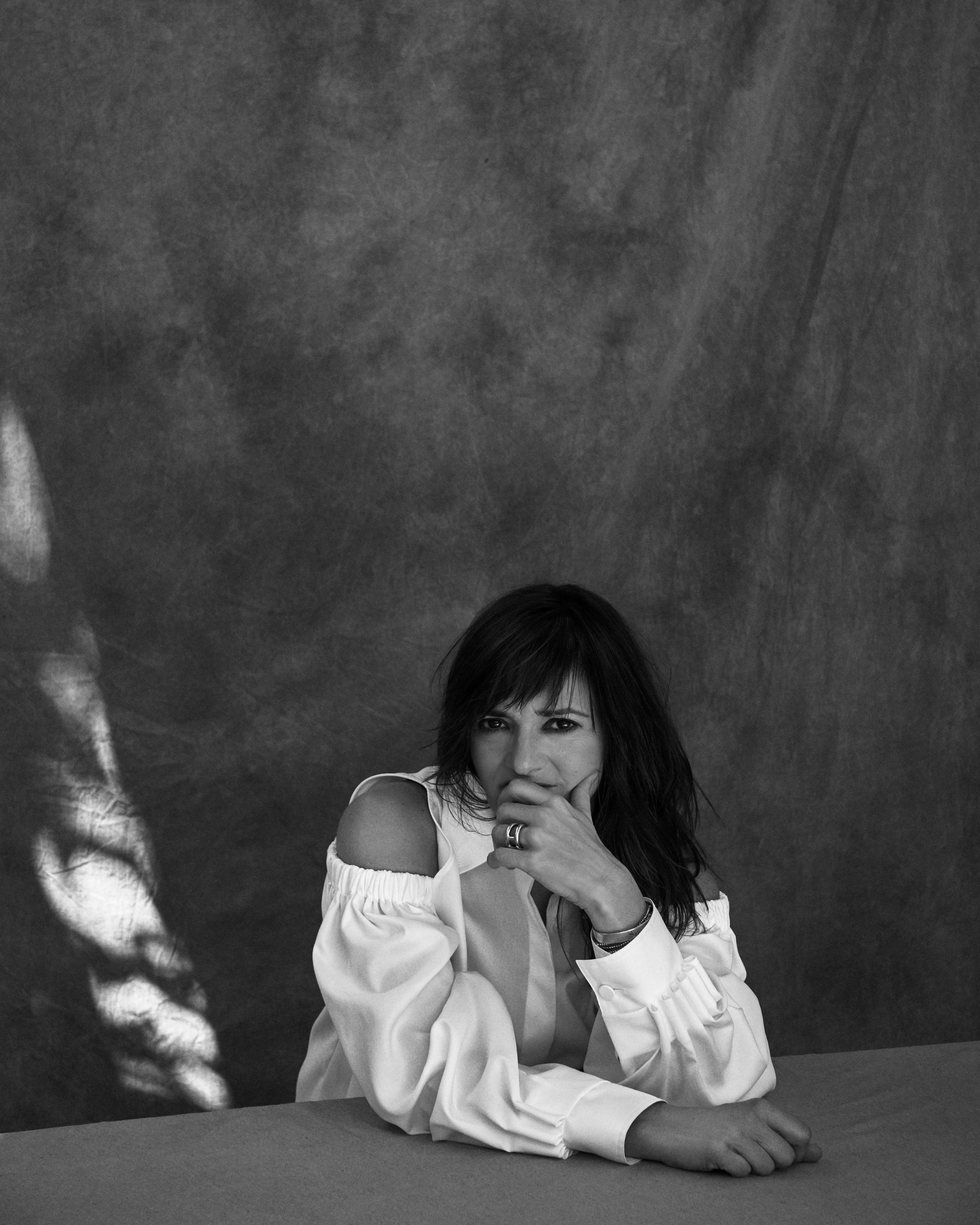
Mafalda Veiga
by Alkyoni Roilou
She writes the lyrics, she composes the music, she plays the guitar and she sings. When she started more than 35 years ago she was the only girl musician who did that. Today, after many Silver, Gold and Platinum albums and countless concerts in Portugal and abroad, Mafalda Veiga is among the best-known Portuguese singers and songwriters. She herself remains as unaffected and down-to-earth as if her journey in music began yesterday. She continues to sit quietly, observe the world and then turn all this into songs. And it is this simplicity and immediacy that Mafalda Veiga brings into her concerts, making viewers feel as if they have been invited to her place to listen to music and sing along. These days she share her time between Lisbon and Algarve, where she has her studio and prepares her new album that will come out in 2026, almost simultaneously with a book from Imprensa Nacional with the lyrics of all her songs.
Last year you did your first digital EP. How come?
That was kind of fun. Because in a digital EP you can put almost everything in. The making of things, lots of explanations about everything. Why I did this or that song, and how it happened. And you have video clips for all the songs realised by famous cinema directors.
Why did you do it?
Well, I did it because I had five songs, and I wanted to go to another project. And those five songs are the EP; I could have done a CD or a vinyl or whatever, but at that time it made no sense for me. And with my team we all decided that it would be nice to do a digital record to see how it works. So we had a QR code and we had this roll-up poster with the QR code in the concerts and people could go and listen the record using this QR code.
How many people went in?
I have no idea, there is no way of getting the figures from the platform on which they are uploaded. But I do know it went very well because nowadays you always get feedback from Instagram and Facebook when you do a post. And the posts we did for this digital record went very well and we had many enthusiastic messages.
You spoke about your team. How many people is your team?
With technicians, musicians, the road manager and everybody, we are 16. I have really good partners, good musicians with me. I always had. I have to admire them as musicians but I have also to love them as persons, that’s how I choose them. So I always had bands that I loved but also admired a lot. It’s a wonderful combination. And I still do that. I also love my technicians. The technical team are so important because they are the guarantee that you can make your music go to people and reach them in the right way. If you can really rely on your team, then you know everything is going to be okay. You don’t have to think about anything. You just sing.
Do you prefer concerts or solos?
I prefer concerts, I prefer to be with the guys. It’s different when you are alone. When I am alone, the good part is that I have the freedom to do things my own way. Because if I play with a team, I have to get the timing exactly right with the drummer, for example, and with everybody else. If I play alone, I have my time. I can tell the songs instead of singing them. I can tell the story. I can have my time. So I like those shows also. But it’s much more fun to be with everybody. And the solo concerts are only for theatres for up to 800 people, for instance, or a thousand people, perhaps. But more than that, it’s with a band.
What is the biggest audience that you’ve played for?
The biggest is in festivals like Rock in Rio where you have 80.000 or 100.000 people watching you.
What’s the feeling?
The feeling is really wonderful. You are doing what you like to do and sometimes people are singing with you and it’s a really nice feeling. To see people make your songs their own.
The feeling is the same when you play in front of 10,000 people and in front of 800?
No. But for instance, when I made this show, in Campo Pequeno a big place, for my 30 years of music—I’ll show you the video… (she plays me a video with her on stage and tens of thousands of people below singing with her). The place was full. So many people singing with me because people know lots of my songs, so they sing. Sometimes I don’t have to sing. Just listen or play with them...
Can you see them or do you have lights and you can’t see anything?
I like to see. And sometimes I ask my light technician to show me a little bit. I like to see the people; I don’t like to play for blank. I like to get the feeling. And what I want to say is that people come to find me afterwards and say, “you play for so many people, but you can make the place just so cosy as if it was a small place for few people”.
You are really modest. How do you manage not to be above the earth?
I think we all just do our job. And we are the same people. I have done lots of things and I have had lots of good experiences. But the thing I love the most is the work I do. To write and compose music. So people tell me they feel like they were with me at home, even if they are in places as big as this. Making music is a vehicle, a way to connect people with their feelings. I like that.
You did Fado only once. How come?
I don’t like to sing fado but I love fado, and I know a lot about fado because I was raised in a family where fado was the main thing. My great-grand father was, Simão da Veiga, a very well known bullfighter and a great painter and fado was very typical in those circles of people. My uncle also used to play with Carminho’s mother. He was a really good Portuguese guitar player and he taught me how to play the guitar. When I was 8 or 9 years old, they’d make me sing fado in family parties. And then my father gave me a guitar when I was 11 years old. As soon as I knew some chords I began to write songs. So I found out that the guitar was really a wonderful thing for inventing things and creating things. And I forgot fado quickly.
Is it true that you don’t need to have a beautiful voice in order to sing fado?
Yes, it’s true. One of our greatest fadistas, the father of all the others, was Alfredo Marceneiro. He is a reference. He wrote the most beautiful songs. Traditional fados. He wrote the fados we still sing with different lyrics. Because that’s the thing about fado. We have like 80 fados and then you go and change the lyrics but the music is the same. It’s very normal to make records with those typical fados with new lyrics and invite writers to do different lyrics for the same fados. Alfredo is the composer of most of those fados. He didn’t have a great voice. But he was the fado itself. He was incredible.
What is the difference between a Portuguese guitar and a simple guitar?
Have you seen one? It’s very typical. It’s very a very specific instrument. The shape, the strings, the way you tune it. Everything is different. You have12 strings and you have to put some nails that you adapt to your fingers. They used to play with these two fingers because the Portuguese guitar goes with the voice. It makes melodies. But it’s really difficult to learn how to play.
You play the piano as well?
I don’t play much but it’s my favourite instrument. So I have lots of pianos, different pianos. I also have those very vintage pianos that I bought for my musicians to use in the concert. I have also lots of mini keyboards. Because I used to compose with those kind of sounds. But I’m not a pianist. I use the piano to compose. I began to buy pianos for my musicians because I wanted that sound. I wanted my band to sound like that.
Do you write when you are happy or only when you are unhappy?
I don’t write when I am unhappy. Never. I write when I’m happy. I write a lot about feelings. I tell stories. Sometimes I write about what I felt, but always having a way out. And I think some people connect with my music because of that. Even when I write about things that we all feel and are sad, I always try to find a way out of that sadness. So, I write about whatever. I could write about meeting you in a café. I could write about a movie or a talk with a friend. Everything is a theme for a song.
Is this something that one can teach you or is it something that comes from inside?
No, it’s something that comes from inside. But you can learn some tricks. There are lots of courses, as you know, about writing songs and you can learn some things. But the most wonderful songs that you write are those which are out of the box, that don’t obey any rules. And those songs come from the heart.
When you want to compose, you have to get away from everybody?
I like to disconnect from things. Like if you were writing a novel, for instance, I like to be in the mood, and I love to work all day on the songs and go to sleep with the songs in my head and wake up with the songs and keep doing that continuously. That’s my favourite way, but I can’t do it like this most of the time.
Have you ever experienced going somewhere to be isolated and then nothing comes to you for days?
It happens. But I know that if I keep trying something will come. I have to experiment with the piano. And when it’s not the piano maybe it’s the guitar, and I have to try and play; and things will happen if you keep doing that. If you give up too soon, then nothing happens, of course. But you have to keep trying.