

Cooking is fun
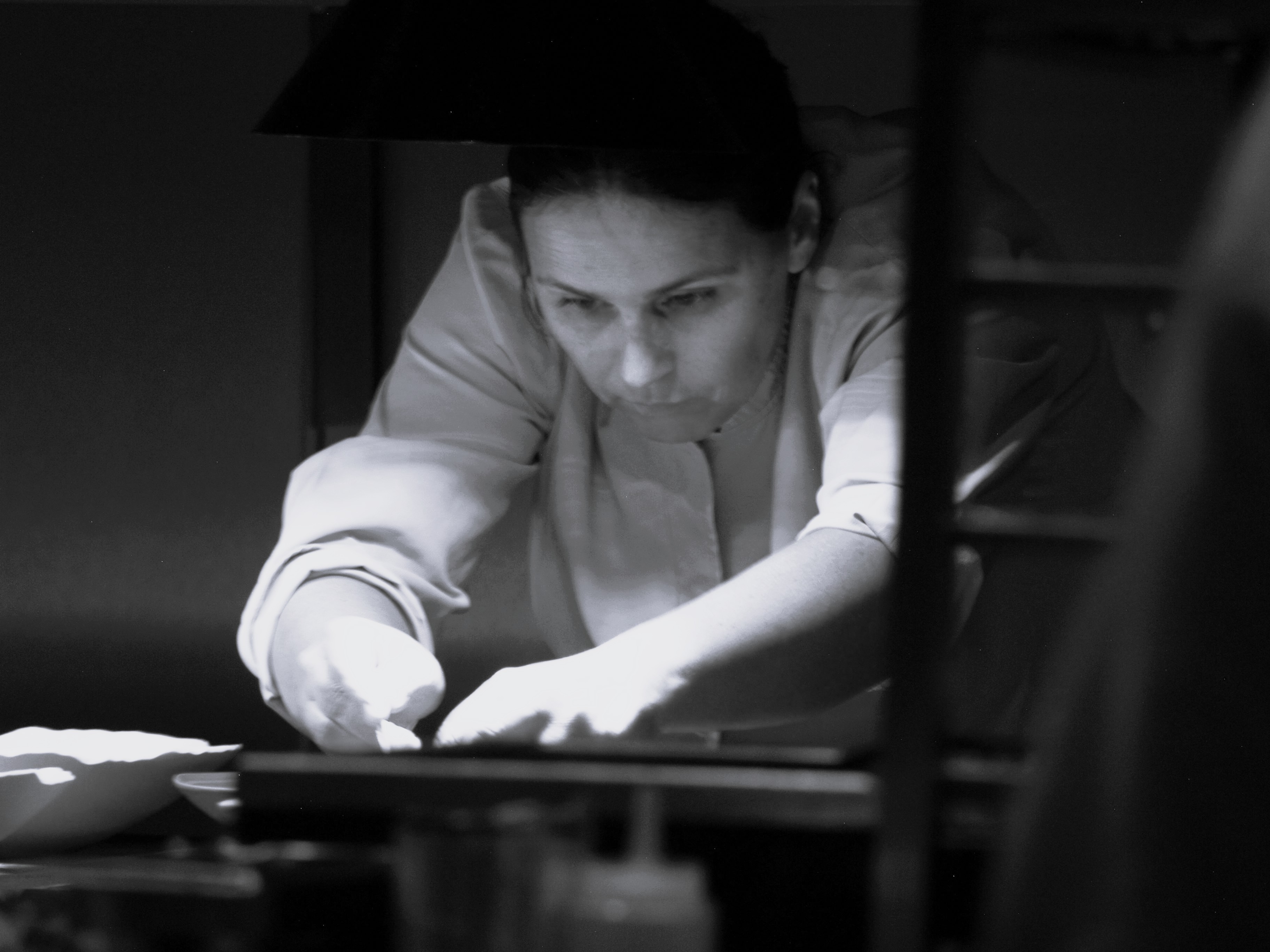 Marlene Vieira
Photography & Words: Lina Stefanou
At Marlene’s, the new gastronomic restaurant of Marlene Vieira, customers sit at a U-shaped counter before the open-plan kitchen. This makes the pleasure complete. You taste, you smell, you see, you hear and you follow the chef in full action. A feverish kitchen and Marlene’s team, expertly choreographed, noiselessly prepare the eight- and twelve-course menus. Sitting beside me is founder and creative director Ana Krausz, who also interprets when Marlene gets passionate and switches from English to Portuguese. For passion is always best expressed in one’s mother tongue. To Marlene, food is the passion that led to her first Michelin star as soon as the restaurant opened, taking it straight to the top. But before this restaurant came Timeout Market, a more democratised place where everyone is able to try her best sellers, and Zunzum gastrobar, the celebration of Portuguese cuisine. Still, Marlene’s is her playground, the place where she feels free to experiment and create her own flavours.
As we chat with Ana I watch the people around us with their faces full of joy and anticipation, as if it was Christmas. After the first snack, a beetroot meringue shaped like a shiny round presious stone, a dish of bluefin tuna belly from Azores lands before me, aged in salt for one month. I try it and it feels like going into the moist cave where Calypso held an enchanted Odysseus for a year on her island. I imagine her serving him something like this to make him forget Penelope, for as we know love goes through the stomach. Mario, Marlene’s right hand, describes the dishes for us. Next comes some pumpkin chawanmushi chopped with smoked dill, pumpkin seeds and a fermented pumpkin foam. How can I describe this? It is like diving into a hot spring and soaking in its warmth. If I were a Japanese man, I might say it is like tasting the tears of a young maiden. The crab that follows comes with all its claws. Not the real ones: this inventive chef has shaped her ingredients into a crab’s shell and claws, and it’s like eating a whole crab in one bite!
If A thousand and one nights was a flavour, it could well be that of the pink shrimp from Algarve with caviar. And just when you think that things cannot get any better, there comes the lobster swimming in a green sea. A lobster-game, fresh and cool, whose taste plays hide-and-seek in your mouth, disappearing and reappearing at a flesh, its pungency coming back to bite your lips. A lobster-adventure, even if it was just two pieces.
I like it when a chef manages to serve you not just mushrooms but the whole forest in one flavour. And Marlene’s mushrooms did exactly that. The dinner continued late into the night, accompanied by some exquisite wines like the white A de Arinto from the Douro wine region valley—or a velvety Italian Μarco de Βartoli, marsala superiore oro riserva 2009. And when we finished, it was time to get some answers through a chat with Marlene.
Anthony Bourdain used to say, “Find out how other people live and eat and cook and learn from them”. Is travelling the best inspiration for a chef?
No.
So what is the best inspiration?
My memories from the early days. And textures are very important, the different textures. I was really picky with the food as a child. It didn’t taste good. So as I grew up I started to try different combinations and different textures to find the right things that I liked. I created dishes according to the textures I like.
So your mother wasn’t a good cook?
No (laughs). Conclusion number one.
And how did you learn to cook?
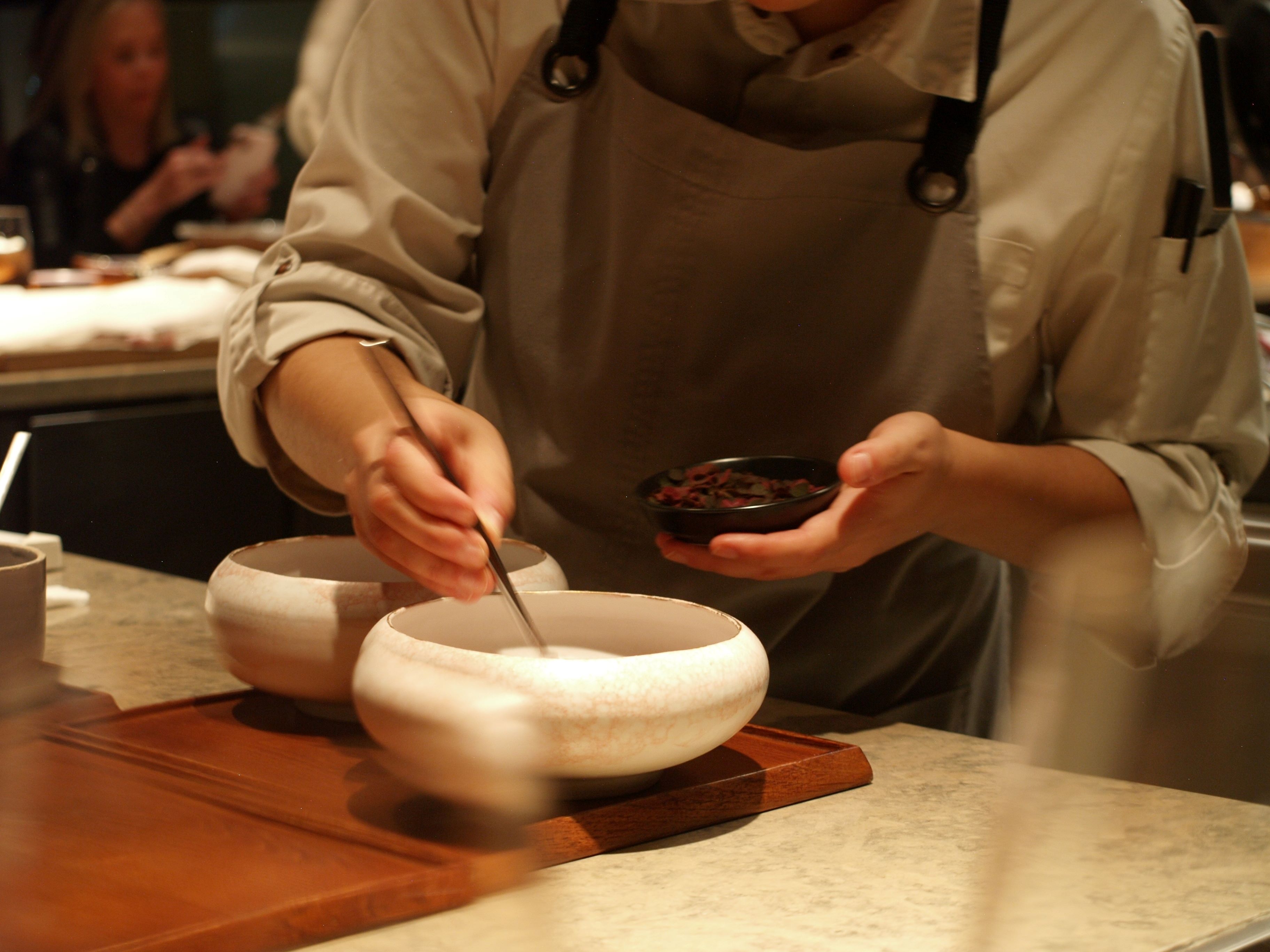
My mother didn’t teach me to cook. I learned in restaurants. My parents had a butchery in Maia, near Porto, and I helped them deliver the meet to the restaurants. I was about 12 years old and that’s how I learned to cook. Because I would go there and watch, and they’d let me try their dishes. The first one was French and Portuguese cuisine. It was fine dining with a French way of doing it, and with a twist of Portuguese. I didn’t learn techniques but I learned about ingredients and dishes. That was the starting point for me to enjoy food. And then later I was able to work in some Gastronomic festivals and markets during my summer vacations. I took a course in a hotel management school and worked in a hotel for a year. But over time, it was restaurants that won me over and where I got my cooking experience. I learned how to cook by being around chefs, being inside kitchens, reading books and testing a lot. Then, when I was around 20, I went to New York for 2 years and that was the only place I have worked outside of Portugal. In a Portuguese restaurant called Alfama. After that, I always cooked. I realised that cooking was fan.
Where did you learn molecular cuisine?
Learning on my own. Studying books. I’ve never worked at a Michelin-star restaurant. Never. My first Michelin-star restaurant is my own.
You never wanted to go, let’s say, to Japan?
No. But I eat Japanese food in Portugal, of course. It’s different, I know. The flavour is not the same in Japan. But the texture is. Everything is about technique.
And you learned Japanese cooking from books?
Just from the books. For example, for mushi in Japan, they use dashi [a soup stock, as a flavourful base]. I don’t make dashi. I make a different stock The technique is similar but the ingredients are different
So it is all about imagination?
Yes. The texture is the most important for me. When I work I start with the textures -because textures change the tastes of things. And then I build up the flavour. But the base for me is always the texture.
When you speak about textures, let’s be more specific. Let’s talk about the lobster I just had.
In Portugal we have the best lobster in the world. The name is blue lobster. The texture is very different from other lobsters. In Ireland, for example, they have a different lobster. The texture is not same. The Portuguese lobster is more creamy. Because of the water. And the flavour is too strong. More sweet. In Portugal we also use a lot of curry because of the Indian influence. I love curry and I wanted to use it, but with this lobster I had to use a green curry from Taiwan. And the herbs I used are basil, coriander, ginger and lemongrass. Because I wanted to give the lobster a texture that’s strong but firm. Stiff and smooth at the same time. It’s a road of trying. In order to achieve this specific texture and flavour from the lobster I had to try and try and try and do a lot of testing. Because you don’t want in the end the taste of the lobster or the taste of the curry to cannibalise one another.
I don’t know how you did it, but the green sauce that comes like a green sea around the lobster tasted like a creamy lobster.
That’s good to hear (smiles). We have a sweet seafood. I needed something fresh and hot to combine with the sweet and rich flavour of the lobster.
How long does it take for one plate to be built and ready to serve?
Every plate is not the same. For the lobster we tried, I don’t know, 10 times, or more… It was a lot. And now for this year the lobster is okay, But for next year is not okay, we are going to change something.
Why change something that is perfect?
It’s never perfect. There’s always something that can be improved.
Is simple food very often the best food?
Yes. But simple can also be difficult. Simplicity is hard to achieve. Simplicity is truly a challenge for a chef. What does simplicity mean to you? It might be different for the chef.
In the beginning, when you started, was it more difficult because you where a woman?
This work doesn’t have gender. It’s the difficulty of someone that is starting something in this area that is really a challenge. I never felt that it was a question of being a woman. It was a question of starting something that is really a challenge.
And yet it is very rare to see women with a Michelin star, No?
I think it’s because of the family. A woman has also a family behind her. The house, the children… everything. And they choose the family. My priority was the kitchen.
But you do have a family? And your husband is also an excellent chef.
It’s all a question of organising. It’s not easy, but it’s possible.
Did anything change after the Michelin star or is the same for you?
The same. But we have more customers, more interviews and more work! (laughs)
Do you have any favourite ingredients?
Eggs, mushrooms, seafood and fish. Good fish. Not salmon. Salmon for me is not good. Because it’s not true. We have the best fish in Portugal.
Which are your favourite?
Sardines and turbot. But sardines is my favourite. Portuguese sardines are very different. Try sardines in Brazil. They are not good at all. The Portuguese sardines are different because you combine the Mediterranean with the ocean. The temperature of the waters make our fish the best fish.
When you want to please yourself,what do you prepare to eat?
I love eggs. Fried eggs with truffle and bread. That’s the perfect dish for me.