

La Vita è Bella

Photography: Lina Stefanou
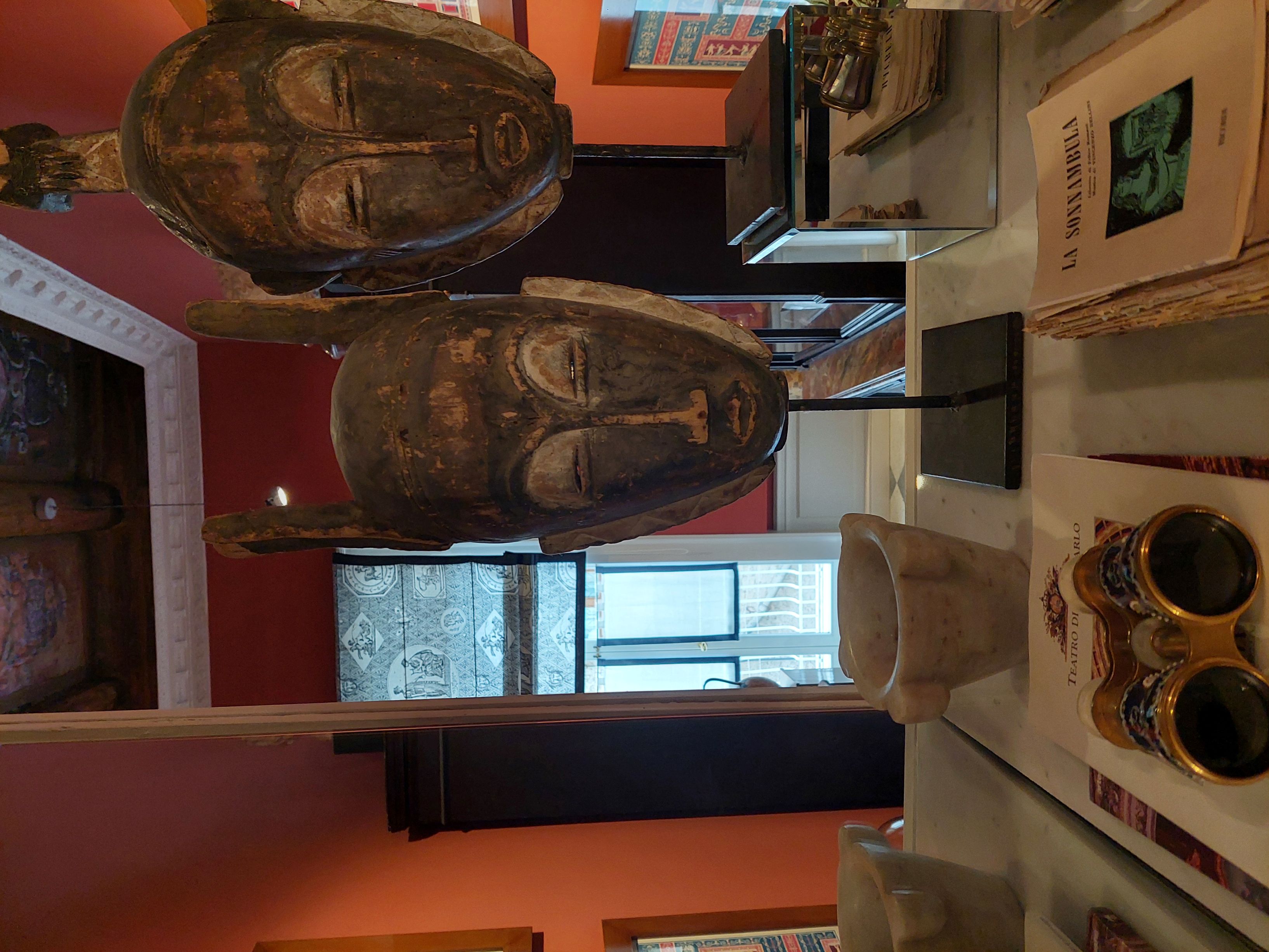
Nothing prepares you for Casa D’Anna, this wonderful place within the historic Palazzo Giannattasio—a baroque mansion dating back to the early 1500s—in the heart of Rione Sanità. Cross the threshold and time stops, making you think you are back in the 19th century. Classical music and arias from well-known operas welcome you like an old friend. From the 6-meter high ceiling with chestnut beams to the exquisite fireplace that dominates the lounge, beauty comes to soothe your eyes. In the Casa you live among art books, rare antiques, sculptures and paintings. An arrow-pierced San Sebastiano by Massimo d’Orta looks at you from the top of the wrought-iron staircase, soft light comes diffused by art deco lamps, a pair of opera glasses rests on the elegant programme from a 1999 ballet production of the Teatro di San Carlo. The ambience is thoughtfully shaped to reflect the personality of its owners, expressing the words of Constantine Cavafy:
“Resting in art again from the effort of creating it”.
Alessandra Calise Martuscelli, who receives me, is a lovable, elegant woman of strong passions, as I’ll soon discover, and strong loves to which she stays faithful. She gives me a tour of Casa D’ Anna and shows me the five different rooms that seem to come out from a Jules Verne novel; each prettier than the other, they are all furnished with art objects, Vietri tiles, Pierre Frey fabrics and Farrow & Ball wallpapers. At the same time she tells me the story of the house and how she ended up owning it.
The Italian architect and artist Davide D’anna and his Scotich friend Ken Mc Taggart, together with their French friend Pierre Vercoustre, joined forces to create this dreamy setting, enriched it with objects purchased during their travels and, in 2013, turned it into a unique B&B. In 2020 the couple decided to move on, but didn’t want the beauty they created to be lost. That’s when Alessandra came into their lives. They persuaded her to buy it.
“I fell in love when I came here for the first time. My family had a hotel in Istria, but this small Guest House was something totally different”. Alessandra tells me how at that same time she became passionate about the Ipogeo dei Cristalini, one of the secret treasures of Naples, owned by her husband. “The Ipogeo truly changed my life”, she says with shining eyes about the catacombs with the graves of ancient Greeks and Romans who are laid to rest literally under our feet. The entrance to the Ipogeo is just twenty metres away from the Casa. “I like that everything here is above a Necropolis. The dead underneath, and life above”, she says. It is a sacred archaeological site her husband had inherited from an uncle, a baron, but it remained closed as the area had been dangerous, dark and dirty for years. Alessandra speaks with passion about father Antonio Loffredo whose actions, along with those of a few other charismatic figures, led to the spectacular change of Rione Sanitá into a safe and lively part of the city. And as Casa D’Anna is next to the Ipogeo, when the three friends proposed to sell it to her she accepted. “I live in a residential, normal and beautiful area. But nothing happens there. Here, everything happens. Here is life! And this is -let’s say- my beautiful office”.
I am to enjoy the Casa’s hospitality for a few days, and after the first one it already feels like home. An ideal place to sit and read or write, to invite a friend and let daybreak find you ensconced in the comfortable settees, drinking and chatting. I found everything I love here. Culture, music, painting and, above all, peace.
I am staying on the upper floor, with its communal Mediterranean veranda, its bougainvillea and jasmine vines. This is where guests enjoy their breakfast when the weather is good. The rooms are named after the islands in the Bay of Naples: Capri, Ischia, Procida, Palmarola and Nisida. Mine is Palmarola, and the bathroom is almost as large as the room! I stand on my small balcony and take in the activities in the street below. You get this feeling of being in the neighbourhood of a thousand faces, as the traffic and the people in the street keep changing throughout the day. When the day is cold, breakfast is served in the little lounge on the top floor, and the meal is customised to the preferences of each guest. Mine includes, in addition to some excellent coffee, two types of cakes (the pastiera I tried was memorable), homemade jams and yoghurt, freshly squeezed orange juice, delicious fresh fruit salads, scrambled eggs and bread from the Sanità market. As I eat I study the small map Alessandra gave me, with the various monuments and other sights worth visiting in the area. They have issued this map under the name of the Fondazione Ipogeo dei Cristallini. Looking at it, I realise that Sanitá is full of catacombs. Naples is literally built atop its past. I am also pleasantly surprised by a final category in the list with the heading “Artists and Crafts”. So there is a whole community here, proud of its members, who support one another! With these optimistic thoughts I leave the beautiful house behind me and head for the Archaeological Museum. The map tells me it’s just a 12-minute walk.
Alkyoni Roillou